Out-of-sample holdout
A slice of history is locked away before development starts and the parameters never see it. If the edge does not survive data it was not fitted to, the system goes no further.
The only automated trading algorithms designed specifically to get payouts from prop firms.
Past performance is not indicative of future results. Backtested and simulated results are hypothetical, carry inherent limitations, and do not represent actual trading.
Rule profiles shipping for the firms and platforms you already trade
Certificates issued by the firms themselves, for withdrawals taken off accounts we ran. Recipient names are redacted; nothing else is touched.
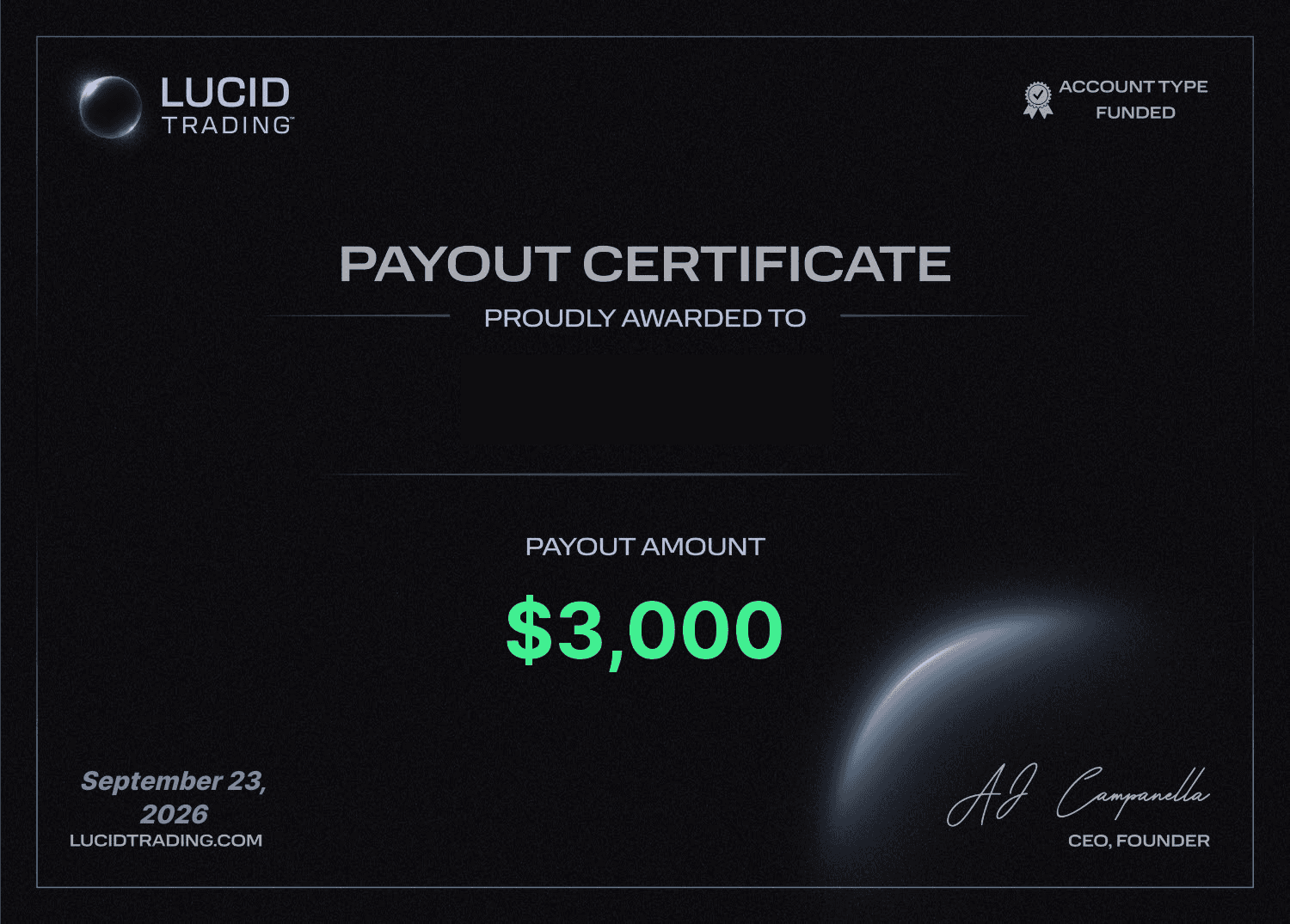
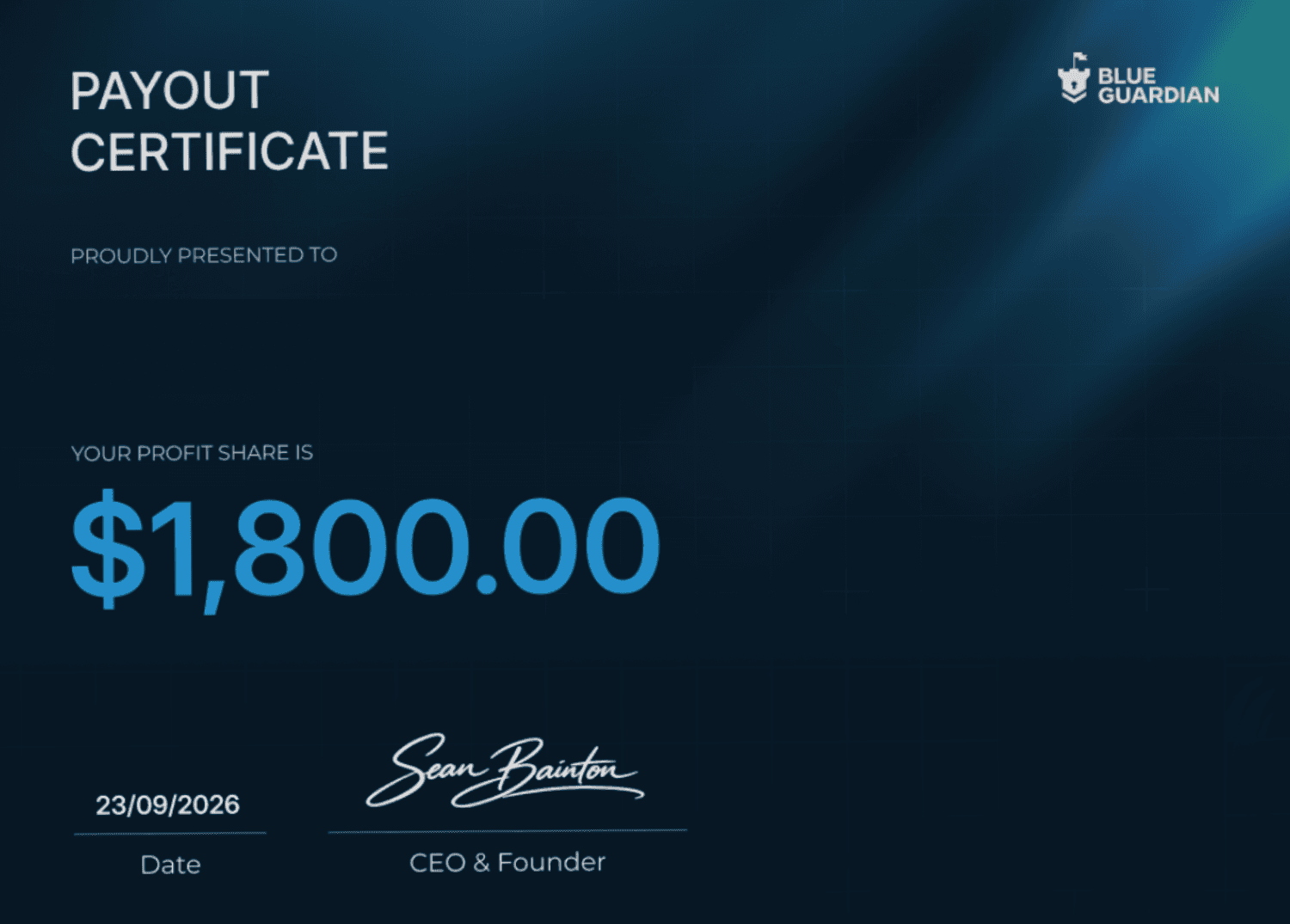
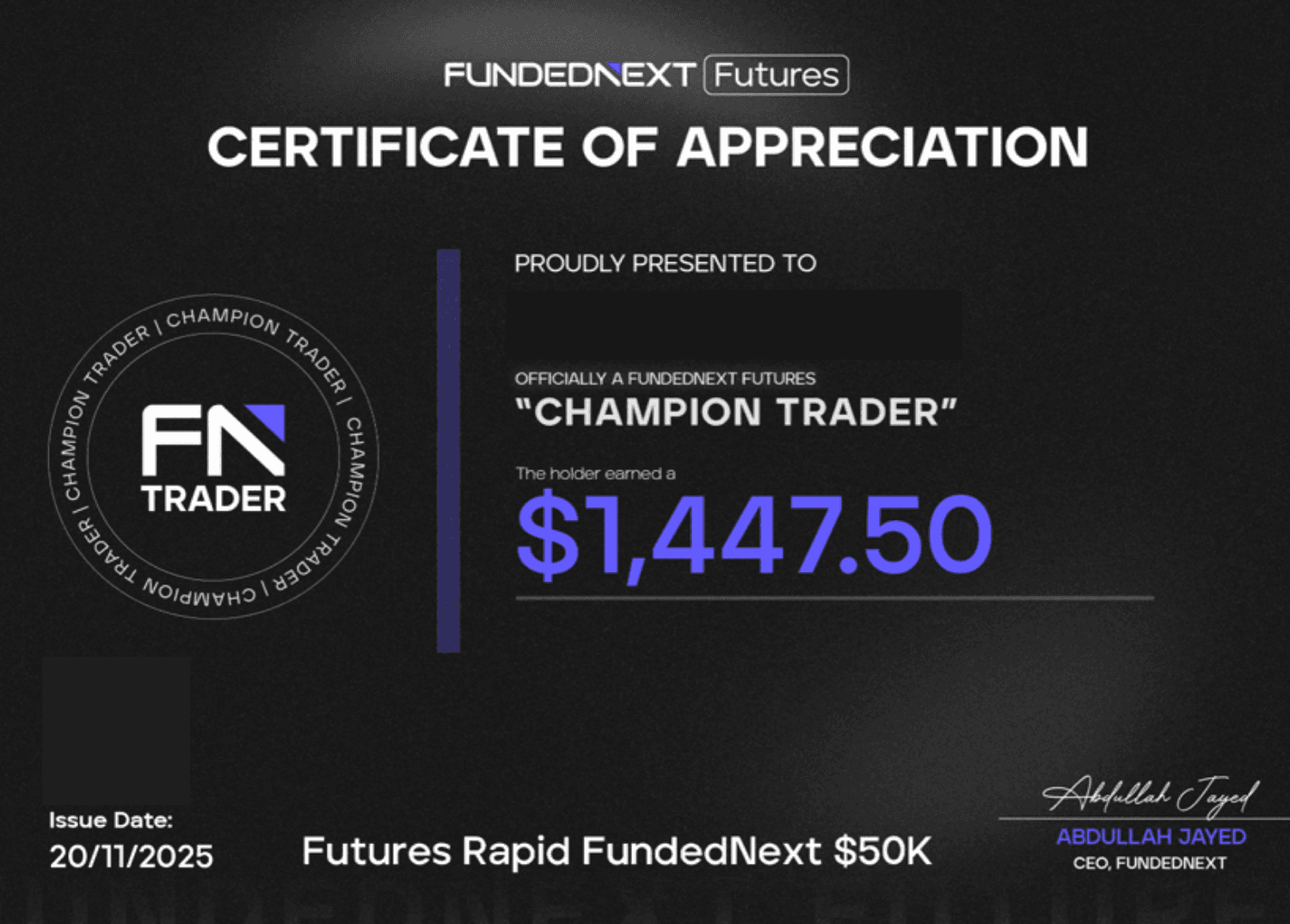


All systems receive thorough out-of-sample and walk-forward testing. We don't publish any algorithms until we have gotten at least 2 payouts.
A slice of history is locked away before development starts and the parameters never see it. If the edge does not survive data it was not fitted to, the system goes no further.
Optimise on one window, trade the next unseen one, roll forward and repeat. What we judge is a chain of out-of-sample periods, not a single curve tuned until it looks good.
Every test pays commission and slippage. An edge that only exists before fees is not an edge, and it is the first thing a live account would find out.
Trailing drawdown, daily loss limit and consistency rule are applied to every simulated session. A profitable backtest that would have breached an account still counts as a fail.
Passing the research is only the entry ticket. Every candidate runs on our own prop evaluations and funded accounts, under the same rules you will be trading.
Passing an evaluation proves little; getting paid proves the system survives the payout terms too. Nothing is published until it has taken at least two payouts.
A long catalogue converts better, so most vendors build one. We would rather keep it short and be able to defend every line of it, because surviving a trailing threshold, a daily loss limit and a consistency rule at once is a narrow problem that does not have nine good answers.
We only publish an algo when it has gotten at least two verified payouts.
Opening-range breakout for index futures, sized against the trailing threshold.
No profit share and no cut of your payouts - the firm already takes theirs. You pay for the software and keep every dollar you withdraw.
Cancel any time
Three months free
All future versions
I burned four Apex evaluations on my own discretion before this. PhantomOne cleared a 100K on the second attempt and the trailing-drawdown sizing is the reason - it refuses trades I would have taken.
The consistency rule was what kept failing my withdrawals, not the trading. First payout cleared in eleven weeks.
Being handed the NinjaScript settled it. I read the risk module before it touched a live evaluation and the daily kill switch does exactly what the docs say.
If it is not here, just email the desk.
Sometimes. We deliberately do not publish a pass rate: an evaluation outcome depends on your firm, your account size, the rules in force on the day and the market you get, so any single percentage would be closer to marketing than measurement. What we can tell you is that attempts fail, the fee is gone when they do, and anyone quoting you a guaranteed pass is selling something worse than this.
Other companies ship quantity; we ship quality. A long list converts better, which is why most vendors build one, but surviving a trailing threshold, a daily loss limit and a consistency rule at once is a narrow problem that does not have nine good answers. We only publish an algo when it has gotten at least two verified payouts, and that is why the list grows slowly.
Automation is permitted at every firm we ship profiles for, but the details differ: some prohibit copy-trading the same strategy across accounts, some restrict news trading, and most ban high-frequency latency arbitrage. PhantomOne does not do the last one. Check your firm's terms for the first two before running multiple accounts.
A static threshold never moves, so banked profit is permanently yours. A trailing threshold follows your high-water mark, either at the daily close or tick by tick intraday. Intraday trailing is by far the harshest, because unrealised profit you give back still counts. Our firm profiles change the exit logic accordingly.
Because it fails payouts, not evaluations. Many firms cap the best single day at 20-50% of total profit at withdrawal. Traders pass, then discover one lucky session has locked up the account. A daily profit cap stops the session once it has earned its share, which keeps the best day near 23%.
Yes. Every plan includes a full course on installing, configuring and operating the algo, including the optimal prop firm accounts and account sizes to run it on.
Yes, within your machine limit - two machines on monthly and annual, five on lifetime. Confirm your firm permits correlated fills across accounts first - a few treat identical entries on multiple accounts as copy-trading and will deny payouts for it.
We update the shipped profile and note it in the changelog. Firms revise thresholds and payout terms often, and some have shut down entirely. Their current rulebook is always the authority, not our profile.
14 days. Run it on a firm demo or a reset account. If the behaviour does not match the published tear sheet, open a ticket and we refund in full. We do not refund failed evaluations - the fee is the firm's, not ours.
Every system ships with a 14-day window. Run it on a firm demo or a reset. If the behaviour does not match the tear sheet, you get a refund.